
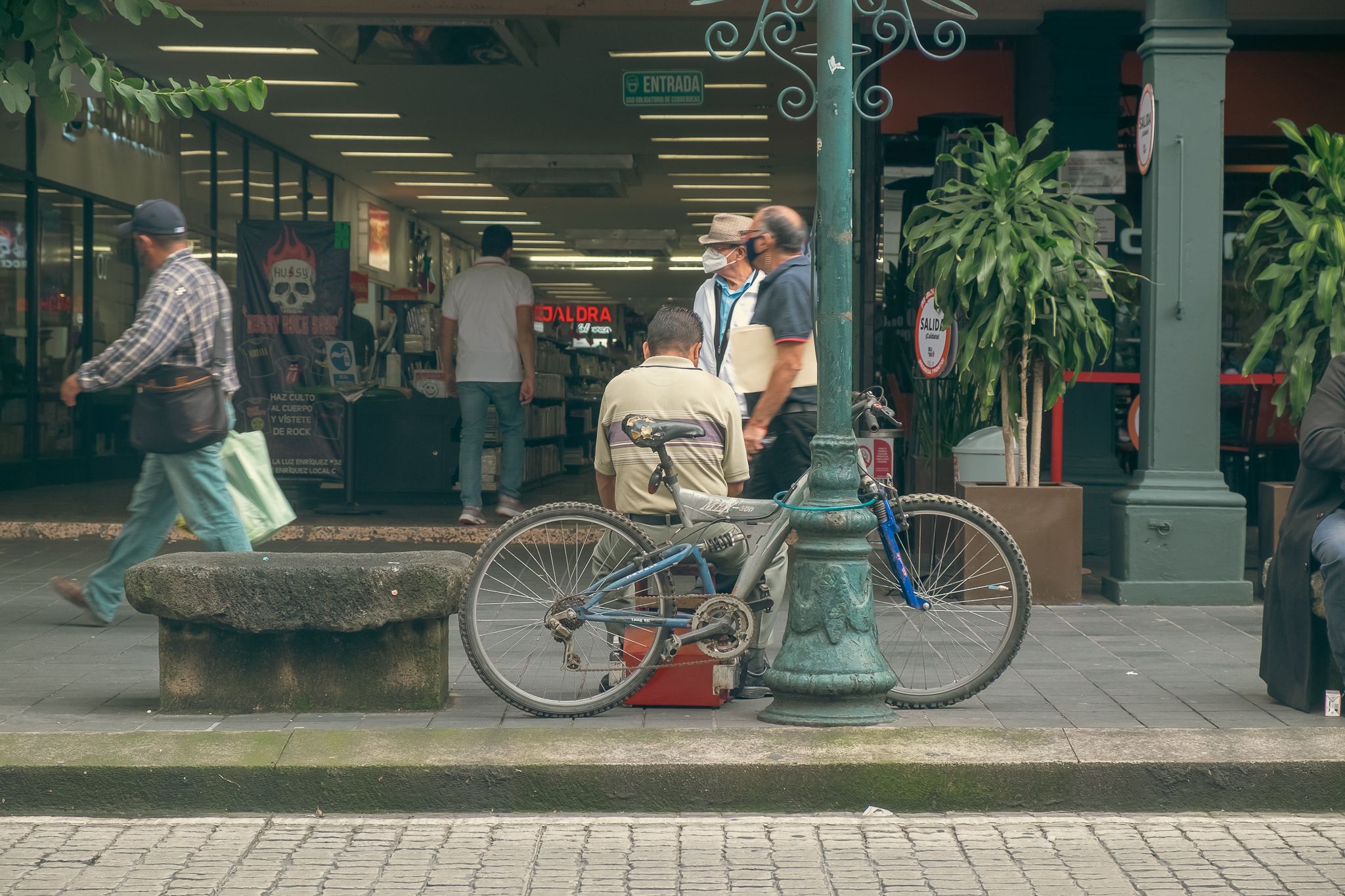
Xalapeña afternoon in September
18/09/2022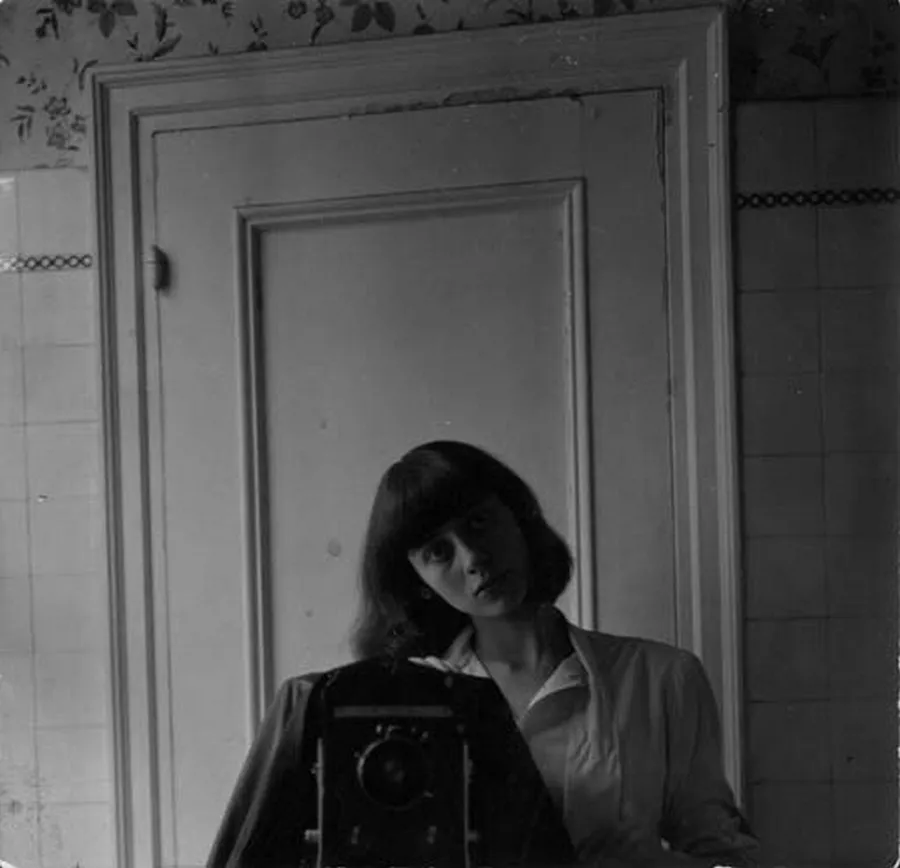
Diane Arbus
18/09/2022Berenice Abbott is one of the most versatile photographers in history, capable of jumping from the skyscrapers of New York to illustrate with photographs the fundamental laws of physics. Moreover, her legacy is not limited to her photographs, since it was thanks to her that the works of Eugène Atget.
Born July 17, 1898 in Springfield, Ohio. In 1917 he began his studies in journalism at Ohio State University. In 1918 she left her studies to live in New York, where she moved around Greenwich Village (a large residential area on the west side of Manhattan), with the idea of becoming a sculptor. In 1921 she travels to Paris to study sculpture. She became a member of Eldorado, He was in Paris with a group of American artists and came into contact with the Surrealists.

After two years of training as a sculptor in Berlin and Paris, she became a laboratory assistant for Man Ray, who is known to have hired her because she had no experience, so that he could mold her in photographic printing under his own methods and guidelines. The clientele were mainly American tourists, but the studio of Ray was also the birthplace of photographic surrealism. He specialized in the artistic world, photographing emerging French and American writers and artists who needed a portrait to promote their work in shop windows. He photographed, among others James Joyce o André Gide.
In 1927 he photographs Eugene Atget in his studio and in 1928 he buys a lot of his photographs from André Calmettes, director of the municipal theater of Strasbourg. Between 1928 and 1929 Abbott will participate in numerous exhibitions and publications of contemporary photography on his own initiative, presenting his work and that of Atget, among which is the one of Film and Foto of Stuttgart. In February 1929 Abbot left Paris and went to New York to start the same path: opening a portrait studio, participating in the exhibitions of modernist photography and the glorification of Atget.
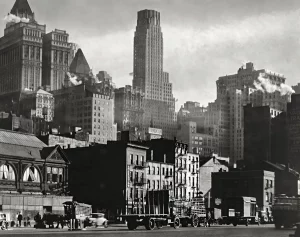
Between 1935 and 1939 Abbott concentrated all his energies on photographing the city for what was to be his book Changing New York, with a large-format 18×24 camera, such as the one in Atget. The book was published in 1939 with an introduction by the distinguished art critic Elizabeth McCausland. It is known that he continued to photograph New York until 1956.
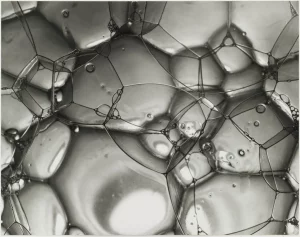
From 1939 to 1961 Abbott produced a series of works known as her scientific photographs, with the idea of turning photography, no longer into an art form, but into a bridge between scientists and what she called "scientific photography". men of law. In September 1944, the magazine Science Illustrated hires her as a photographer and a year later her photograph ‘soap bubbles’ would be published in the magazine, becoming one of the most famous in history.
Died December 9, 1991, in Monson, Maine.
 Spanish
 English
 Portuguese