
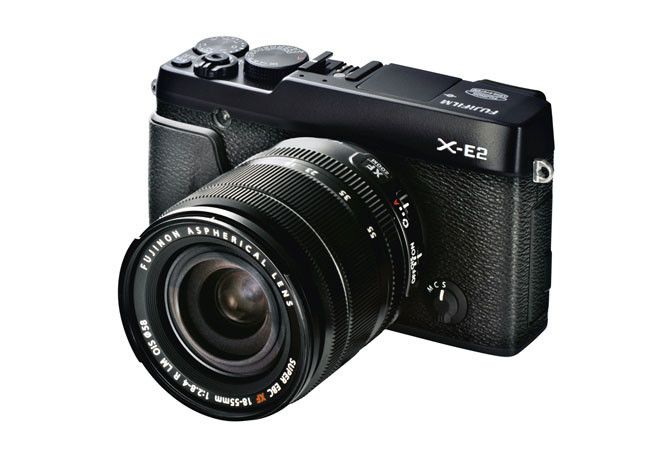
Fujifilm XE-2 in 2022
15/09/2022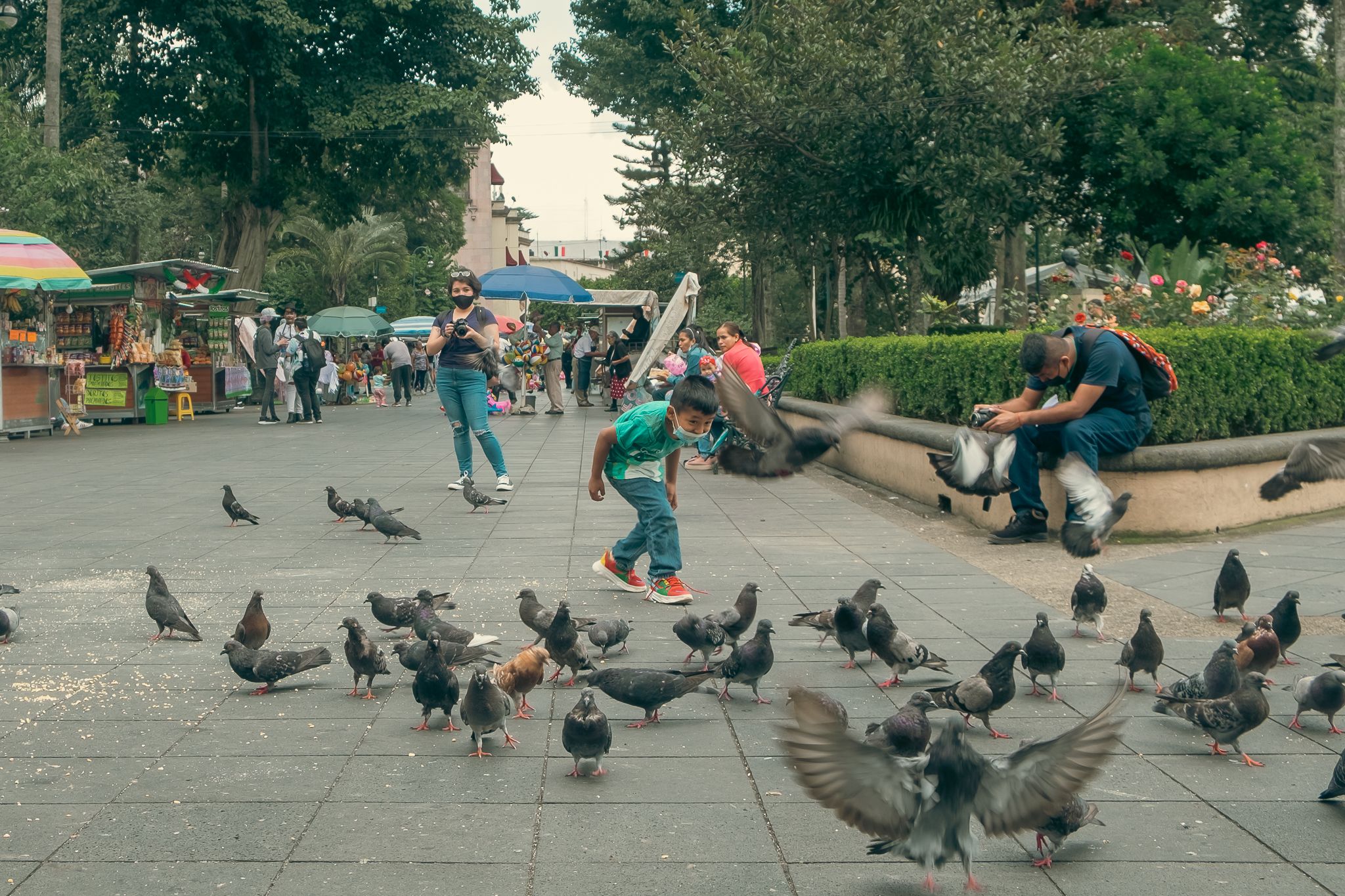
Talk at the Xalapa House Museum- Best Pictures
17/09/2022Henri Cartier-Bresson is considered one of the most influential photographers of all time. Witness to the evolution of human beings and their environment throughout the 20th century, with his camera he has recorded industrialization, the modernization of cities, the most important personalities of his time, as well as the most revolutionary political and social conflicts of recent history. He is the author of the book ‘The decisive moment‘.‘, Today, he is considered the ‘bible’ of street photography by many photographers. In addition, he was one of the founders of the agency Magnum and one of its most important representatives throughout his life. He is also known as the “eye of the century” for being a key witness of history and the maximum exponent of a way of doing photography, working the scene and waiting for chance to transform the image from interesting to ‘unrepeatable’.
“Your first 10,000 photographs are the worst.”
- Henri Cartier-Bresson
Henri Cartier-Bresson was born into a bourgeois family on August 22, 1908 in the French town of ‘Chanteloup en Brie’, 30 kilometers from Paris, although he grew up in Paris. His great childhood passion was painting. He adorned his letters with small drawings and filled his notebooks with sketches. His parents owned a yarn factory that they wanted Henri to run, but he wanted to devote himself to his great passion: painting.
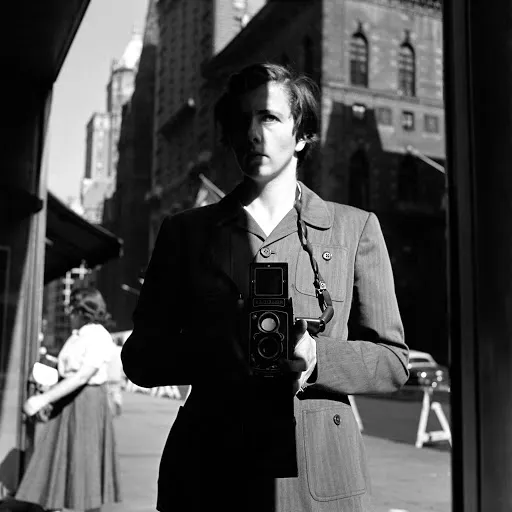
At the age of 15 he fell in love with painting, which he had learned about a decade earlier from his painter uncle, who took him to see his studio when he was 5 years old. He fell in love with those canvases. At that age, he bought his first camera: a Kodak Brownie Box, but for him the camera was only «a quick way to draw intuitively». He was still focused on painting. That first camera, the ‘Brownie Box’ was also the first camera of great photographers such as Ansel Adams (given to him by his father in 1916, when he was 14 years old) or Vivian Maier (1949, at the age of 23, as documented by his discoverer John Maloof).
His oldest preserved paintings date from when he was 16 years old (1924) and show an evident influence of post-impressionist painter Paul Cézanne, whose work constitutes the most powerful and essential link between the ephemeral aspects of Impressionism and the more materialistic and artistic movements of Fauvism, Cubism, Expressionism and even complete abstraction. Until he was 18 years old, he painted regularly with Jacques Émile Blanche and Jean Cottenet. At the age of 18, his parents wanted him to go to business school in order to run the large family business, but he failed several times in high school and was allowed to enter a drawing academy, where he met the French surrealists.

Bresson began developing his own photos at the age of 20. Just in 1929, at the age of 21, he was in Africa doing his military service, liked it and stayed, as did other painter friends like André Gide and Louis Ferdinant Celine. At that time his friends were painters, not photographers, and it was customary to spend at least one season in Africa. At the age of 22, photography won the battle against painting. It was 1930 and he was 22 years old. He traveled to the Ivory Coast, where he was a hunter. But the most important thing about that time is that he began to take pictures and lived his transition from painter to photographer. He exchanged his shotgun for a Leica III with a Summitar 50mm f2. And he made use of the hyperfocal by marking the lens. Just that year, 1930, the book ‘Atget, photographe de Paris’.’, The work of the famous documentary photographer-topographer who had died three years earlier. The work of Eugene Atget got him interested in photography. It «impressed» him. It was in those days that he took the photographs of the people of Dieppe.
«Photography is a means of artistic expression like music or poetry but it is also a medium that allows us to bear witness.»
- Henri Cartier-Bresson
In 1934, at the age of 26, he traveled to Mexico City and lived there for several months. Most of the people with whom he interacted assiduously were very involved in the revolutionary struggle. In Mexico he felt the desire to make films on his own. There he met the Mexican photographer Manuel Álvarez Bravo, with whom he exhibited in 1935. He was 27 years old. That exhibition was shown at the Levy Gallery of New York next to the photos of Walker Evans, the father of American documentary photography, only five years older than he was. In 1935, in the United States, he learned the rudiments of the film camera in a cooperative of documentary filmmakers who were strongly influenced by Soviet ideas, both political and aesthetic, and gathered around the American photographer and filmmaker Paul Strand (the father of direct photography) under the name of ‘Nykino’, (NY for New York + kino, which means cinema in Russian) and made his first short film.

In June 1940, at the age of 32, he was in charge of photography in the French army. He was taken prisoner. He spent almost three years (35 months) in a prisoner-of-war camp. After three attempts, he managed to escape in February 43, aged 35. He fled to Paris and worked for the French resistance. He took photos of the German occupation and retreat.
In May '47 he founded Magnum, the first cooperative photo agency, where photographers keep the rights to their photographs and decide for themselves where they travel. Thus, they share the world among themselves: Layer y Chim (Europe), George Rodger (Africa and the Middle East) and Cartier-Bresson (Asia).
In 1952 he published ‘Images à la sauvette’, ‘The Decisive Moment’, with a cover designed by Henri Matisse. In it he indicated that the decisive moment can be for different reasons:
- By eventThe protagonist(s) performs or suffers a remarkable, memorable, newsworthy or incidental action.
- By geometry/composition: The elements are arranged and aligned like a star in the firmament.
- MessageThe image conveys an idea or serves as an example to convey an idea, an emotion or a message.

In 1967, at the age of 59, he divorced his wife ‘Eli’after 30 years of marriage and three years later, in 1970, he married the young photographer Martine Franck, thirty years younger. In 1972, at the age of 64, she had her first and only daughter: Melanie and fatherhood took away his desire to travel. At that time in the 70s he no longer wanted to receive assignments for reportage and was increasingly dissatisfied with the agency he founded: Magnum, which he felt was moving further and further away from the spirit that motivated its creation, so he retired from the affairs of the agency in 1974, at the age of 66, and devoted himself to organizing his archives, selling his prints and making books and exhibitions, painting, drawing and taking landscape and portrait photographs with his Leica.
 Spanish
 English
 Portuguese