
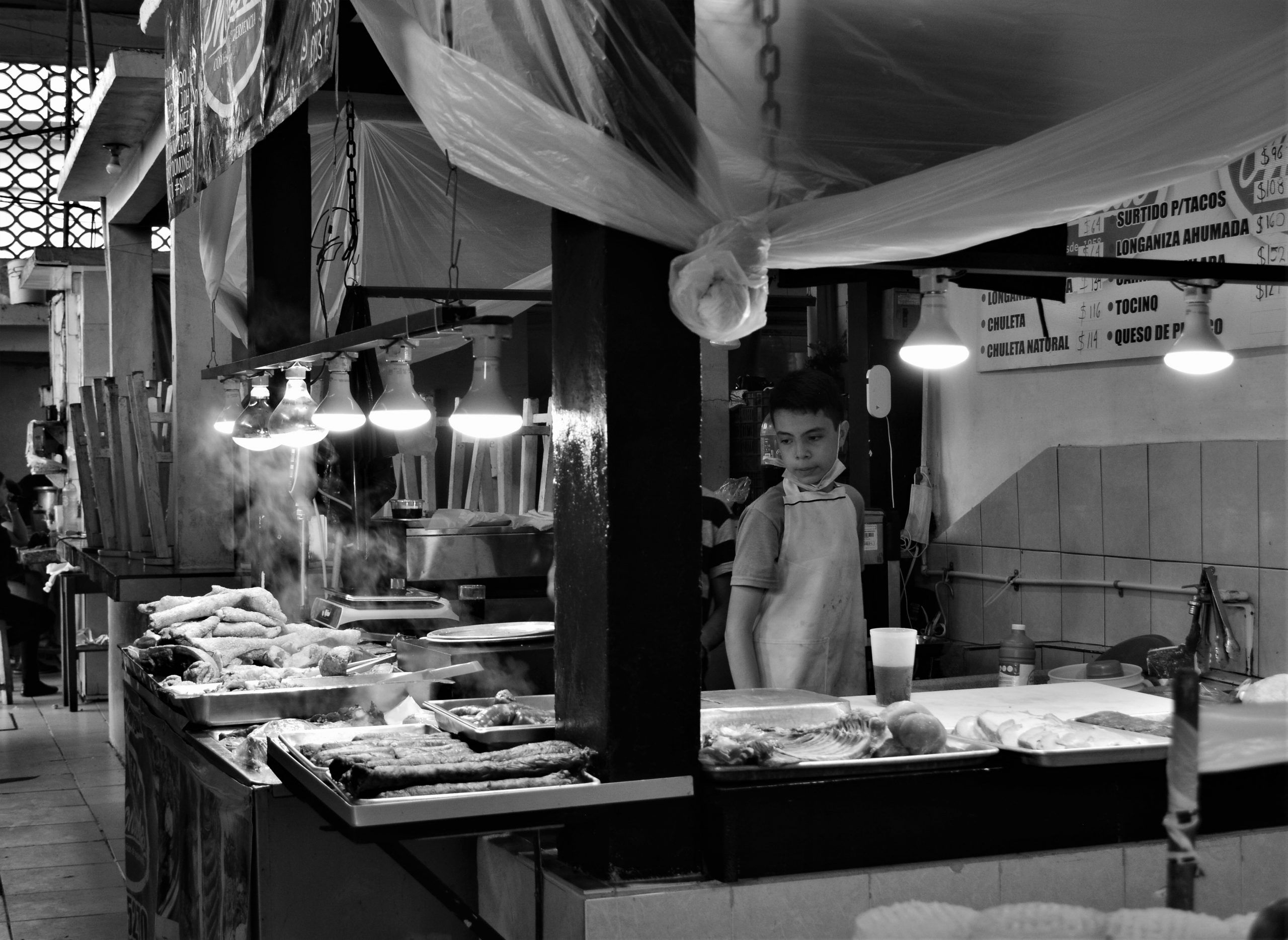
First photowalk Take the street #Xalapa
03/10/2022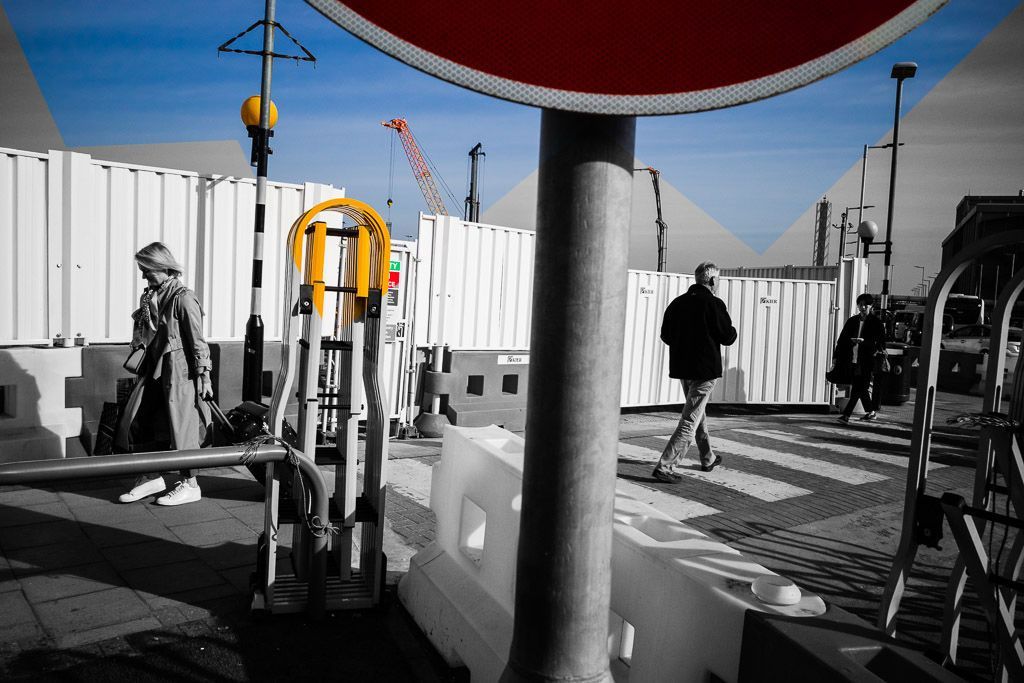
Black and white or color street photography?
10/11/2022Fan Ho is one of the most popular Asian photographers of our time despite the fact that all his work was developed around the middle of the 20th century.
Self-taught since his adolescence in a China he had only known during the war and a photographer with a bright future ahead of him in a country that was born coinciding with his coming of age, he reached the top of the world scene thanks to his creative photos of great lyrical beauty, dramatic power and poetic grandeur.
A diverse cultural background stands out in his work, which makes his creative style unique.
The millimetric geometric composition of the framed elements stands out, showing on the photographic paper an anachronistic Hong Kong, strangely uninhabited and almost dreamlike, reminiscent of the Bauhaus school or the works of Giorgio de Chirico.

Fan Ho was born in Shanghai on October 8, 1931, four years after the beginning of the long Chinese Civil War (1927 - 1949).
When he was 14 years old, in 1945 his father gave him a Rolleiflex camera as a gift.
At that time he became interested in Chinese literature. He wanted to be a writer and poet, but the severe migraines he got from reading made him give it up and focus on photography.
In 1949, at the age of 18, a few months before the end of the civil war and the proclamation of the People's Republic of China (on October 1, 1949 Mao Zedong proclaimed the People's Republic of China (PRC) after defeating the Kuomintang nationalists in the civil war), fleeing the war -as half a million Chinese did that year- he moved with his family to Hong Kong, which was then no longer a British colony but was reborn with a new society where the working class was taking positions. And he began to photograph this city and to submit his photos to contests, with extraordinary success.
Inspired by the viewpoint of the Bauhaus - the first design school of the 20th century, founded in 1919 by Walter Gropius in Weimar (Germany) - and with a strong sense of abstraction, he photographed a multicultural and cosmopolitan Hong Kong that he turned into a magical city of lights and shadows, empty spaces inhabited by crowds and solitude.

At that time his characteristic altered perspectives, dramatic compositions and surrealist abstraction and the famous photos of the markets, streets and slums of Hong Kong were born.
Ten years later, in 1959, at the age of 28, he published his first book: ‘Street scene photography’, which 15 years later had a second part: ‘Street scene photography Part II’ (1974. He was 43 years old).
And in 1962, at the age of 31, he published ‘Modern photography’.
In those years, in the period between 1958 and 1965 (when he was between 27 and 34 years old) he was on the list of the 10 most important photographers in the world made by the American Photographic Society eight times.

Since photography as an artistic discipline was not enough to support his family, Fan Ho put the camera aside to start directing commercial films, a job he held until the 1990s.
In 2006, at the age of 75, he moved to San Francisco (California) for family reasons.
Once there, he made his work known in different art galleries and began to work with the Modern Books gallery, with which he published the first edition of ‘Hong Kong Yesterday’.’.
His photographs exuded a deep understanding of light and modern aesthetics and soon made their way around the world.
Given the success of his first book, in 2009, at the age of 78, he published the first edition of ‘.‘The living theatre’.
In 2010, at 79, he began revising his negatives and making montages.

 Spanish
 English
 Portuguese